How to Reduce Metal Roof Rain Noise: 3 Expert-Backed Solutions
- September 23, 2025
The relentless drumming of heavy rain on a metal roof can transform your peaceful home into what feels like the inside of a drum. That distinctive pitter-patter might be charming for a few minutes, but during Australia’s intense downpours, it can quickly become an indoor thunderstorm that disrupts conversations, disturbs sleep, and turns movie night into a frustrating exercise in volume adjustment. If you’re living with this acoustic challenge, you’re not alone – and more importantly, there are effective solutions available.
The Science Behind Metal Roof Rain Noise
Understanding why metal roofs amplify rain noise is the first step toward solving the problem. Unlike materials like tiles or shingles that have more mass and texture, metal roofing has two properties that make it particularly noisy during rainfall.
First, metal has minimal mass compared to other roofing materials, which means it vibrates more easily when struck by raindrops. These vibrations efficiently transfer sound energy into your home. Second, the hard, smooth surface of metal reflects sound waves rather than absorbing them, creating that characteristic amplification and reverberation effect – similar to how a drum’s surface vibrates to produce sound.
The good news is that acoustic science offers clear solutions. By adding mass, creating sound absorption layers, and disrupting sound transmission paths, we can significantly reduce the noise without replacing your entire roof.
Solution 1: Sarking – The Thermal and Acoustic Underlayment
Sarking is a specialized reflective foil laminate installed directly beneath your metal roof sheeting. While primarily designed for thermal insulation and moisture control, quality sarking also provides significant acoustic benefits.
How Sarking Works to Reduce Metal Roof Rain Noise
Sarking creates a critical buffer layer between raindrops and your home’s interior. When raindrops hit your metal roof, the sarking absorbs and dampens the vibrations before they can transfer through your roof structure. The most effective acoustic sarking products combine multiple layers of different densities to break up sound wave patterns.
Noise Reduction Rating
Quality acoustic sarking can reduce rain noise by 8-12 decibels (dB), which translates to a perceived noise reduction of approximately 50-60%. This makes a significant difference during even heavy rainfall.
DIY vs Professional Installation
Sarking installation requires removing and reinstalling your metal roof sheeting, making it primarily a professional job. For existing roofs, installation costs typically range from $35-$50 per square meter, depending on roof complexity and accessibility. For new roofs or replacements, adding sarking typically adds only $10-$15 per square meter to the project cost.
Advantages of Sarking
- Provides thermal insulation (can reduce energy costs)
- Creates moisture barrier (protects roof structure)
- Moderate to significant noise reduction
- Long lifespan (20+ years)
- No interior ceiling modifications required
Limitations of Sarking
- Requires removing existing roof sheeting
- Higher upfront cost for retrofitting
- Not sufficient alone for extreme noise reduction
- Installation weather-dependent
- Some products perform better than others
Not sure if sarking is right for your roof?
Our acoustic specialists can assess your specific roof structure and recommend the most effective sarking solution.
Request Free Acoustic Assessment
Solution 2: Acoustic Blankets and Insulation
Acoustic blankets and specialized insulation provide a more accessible solution that can be installed from inside your roof space without disturbing the external roofing.
How Acoustic Blankets Work
Acoustic blankets use dense, sound-absorbing materials (typically polyester, mineral wool, or glass wool) to capture and dissipate sound energy. When installed directly beneath your metal roof or between roof battens, these materials absorb the vibrations and prevent them from transferring into your living spaces.
Noise Reduction Rating
Quality acoustic blankets can reduce rain noise by 15-25 dB, which represents a perceived noise reduction of 65-80%. The effectiveness depends on the blanket thickness, density, and installation method.
“Adding mass-loaded vinyl under acoustic blankets can increase noise blocking by an additional 30%. This thin, heavy material acts as a sound barrier that complements the absorption properties of the blanket.”
– Acoustic Engineering Institute of Australia
DIY vs Professional Installation
Acoustic blankets can be a DIY project for accessible attic spaces, with material costs ranging from $25-$45 per square meter. Professional installation typically costs $40-$70 per square meter, including materials and labor. The main advantage is that this solution doesn’t require removing your roof sheeting.
Advantages of Acoustic Blankets
- Can be installed without removing roof
- Excellent thermal insulation properties
- Significant noise reduction
- Various thickness options available
- Can be DIY-friendly for accessible spaces
Limitations of Acoustic Blankets
- Requires accessible roof cavity
- Reduces ceiling height in cathedral ceilings
- Can be difficult to install in tight spaces
- May collect moisture if not properly installed
- Less effective for low-frequency sounds
Expert Tip: For maximum effectiveness, combine acoustic blankets with staggered ceiling joists or resilient channels to create a “decoupled” ceiling that disrupts the direct sound transmission path.
Ready to silence the rain noise?
Our acoustic experts can help you select and install the right acoustic blanket solution for your specific roof structure.
Solution 3: Ceiling Build-Ups and Acoustic Treatments
When maximum noise reduction is required, or when the above solutions aren’t feasible, modifying your ceiling structure provides the most comprehensive solution.
How Ceiling Build-Ups Work
Ceiling build-ups involve creating multiple layers of sound-blocking and sound-absorbing materials to prevent noise transmission. This typically includes adding mass to block sound, creating air gaps to break sound paths, and incorporating absorptive materials to capture remaining sound energy.
Noise Reduction Rating
A properly designed ceiling build-up can reduce rain noise by 25-35 dB, representing a perceived noise reduction of 80-95%. This makes it the most effective solution for severe noise problems.
DIY vs Professional Installation
Ceiling build-ups are complex projects best handled by professionals. Costs typically range from $120-$200 per square meter, depending on the complexity of the design and materials used. While expensive, this solution provides the most comprehensive noise reduction.
Advantages of Ceiling Build-Ups
- Maximum possible noise reduction
- Can be customized to specific requirements
- Improves overall room acoustics
- Can incorporate other features (lighting, etc.)
- Addresses all frequencies of noise
Limitations of Ceiling Build-Ups
- Highest cost option
- Reduces ceiling height
- Requires removing/replacing existing ceiling
- Significant disruption during installation
- May require electrical/lighting modifications
Pro Tip: Opt for staggered ceiling joists or resilient channel mounts to create a “floating” ceiling that physically disconnects from the roof structure, preventing direct vibration transfer.
Need maximum noise reduction?
Our acoustic engineers can design a custom ceiling solution to virtually eliminate metal roof rain noise.
Real-World Success: A Metal Roof Noise Reduction Case Study
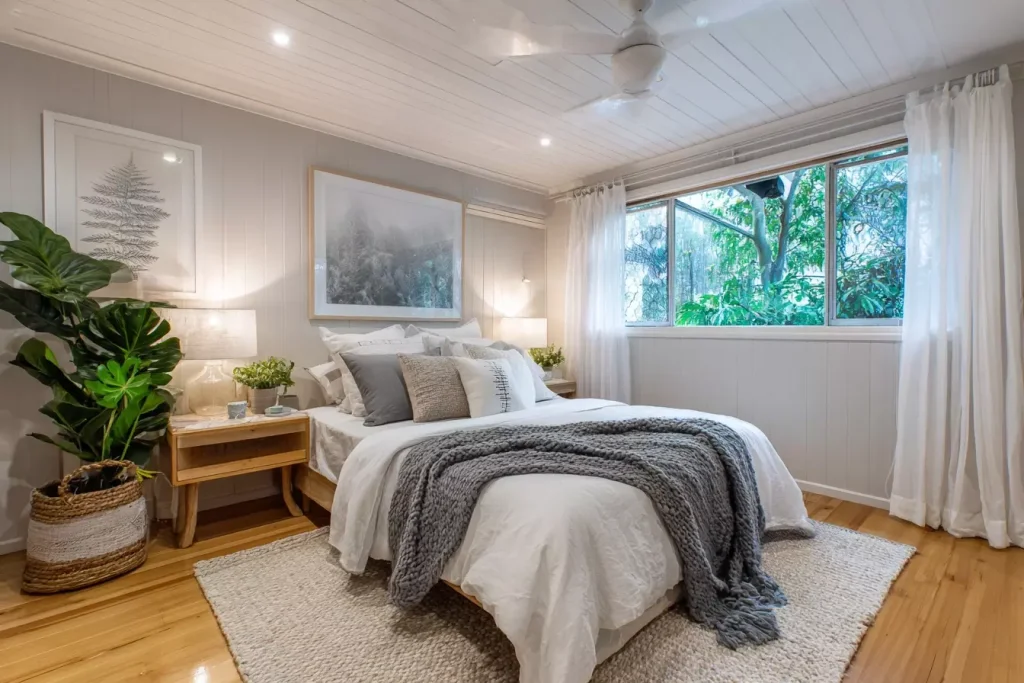
Sarah’s Bedroom Transformation in Brisbane
Sarah, a homeowner in Brisbane’s rainy northern suburbs, was at her wit’s end with the noise from her metal roof during Queensland’s storm season. “It was impossible to sleep through even moderate rain,” she explained. “During heavy storms, we couldn’t hear the TV even at maximum volume.”
The Solution: After an acoustic assessment, we recommended a combination approach:
- Premium acoustic sarking installed during a planned roof repair
- R-30 acoustic insulation blankets with mass-loaded vinyl barrier
- Resilient channel ceiling mounts in the master bedroom
The Results: Noise measurements showed a 70% reduction in perceived rain noise throughout the house, with the master bedroom achieving an impressive 85% reduction. “Now I can sleep through even the heaviest storms,” Sarah reports. “It’s transformed our home environment completely.”
4.8 Customer Satisfaction Noise Reduction 4.5/5 Sleep Quality Improvement 4.8/5 Value for Money 4.4/5Frequently Asked Questions About Metal Roof Rain Noise
Do rubberized roof coatings help reduce rain noise?
Rubberized roof coatings can provide a modest noise reduction of 2-5 dB, which is noticeable but not dramatic. These coatings work by adding a thin layer of sound-dampening material to the metal surface, reducing the initial impact vibration. However, they’re generally not thick enough to provide significant acoustic benefits on their own.
For best results, rubberized coatings should be considered as a supplementary solution alongside more comprehensive acoustic treatments like sarking or insulation. They do offer the advantage of being relatively affordable and can be applied without removing the roof.
Can attic insulation alone fix metal roof noise problems?
Standard thermal insulation alone typically reduces metal roof rain noise by only 5-10%, which is barely perceptible to most people. This is because traditional insulation is designed primarily for thermal performance, not acoustic properties.
For effective noise reduction, you need specialized acoustic insulation with higher density and sound-absorbing properties. The best results come from combining multiple approaches, such as acoustic insulation plus structural modifications that interrupt the sound transmission path.
How does metal roof noise compare to other roofing materials?
According to acoustic studies, an untreated metal roof produces approximately 52 dBA of noise during rainfall, compared to about 46 dBA for asphalt shingles. This 6 dB difference is clearly noticeable to the human ear.
However, with proper acoustic treatments, a metal roof can actually be quieter than many other roofing materials. A metal roof with comprehensive acoustic solutions can reduce rain noise to around 30-35 dBA, which is quieter than most ambient household sounds.
Will insulating my metal roof affect its energy efficiency?
Yes, in a positive way! Most acoustic solutions for metal roofs also provide excellent thermal insulation. Adding sarking, acoustic blankets, or ceiling insulation typically improves your home’s energy efficiency by 15-30%, depending on the specific materials used and your existing insulation levels.
This means your investment in noise reduction can also lead to lower heating and cooling costs, potentially offsetting a portion of the installation expense over time.
Transform Your Metal Roof from Noisy to Peaceful
Living with a noisy metal roof doesn’t have to be a permanent condition. Whether you choose sarking, acoustic blankets, ceiling build-ups, or a combination approach, there are proven solutions that can dramatically reduce rain noise and restore peace to your home.
The right solution depends on your specific roof construction, noise severity, budget, and whether you’re working with an existing roof or planning a new installation. For best results, consider having an acoustic assessment to identify the most effective approach for your unique situation.
Ready for a quieter home?
Our acoustic specialists can help you identify the most effective and cost-efficient solution for your metal roof noise problems.
Book Your Free Acoustic Assessment
Or call us directly: 1300 475 097
Get Your Free Metal Roof Acoustic Assessment
Complete the form below and one of our acoustic specialists will contact you within 24 hours to arrange your free assessment.
Legal Asbestos Roof Removal Rules in Australia: What Homeowners Need to Know
Read More »Cyclone-Resistant Roofing: Design and Material Tips for Northern Australia
Read More »Roofing Material Lifespan vs Cost: What’s the Best Value for Australian Homes?
Read More »At Roofs.com.au, we are dedicated to providing top-quality roofing services across Australia. With years of experience in the roofing industry, we have earned a reputation for delivering reliable, efficient, and high-quality roofing solutions.
Navigation
Get in Touch
We’d love to hear from you! Whether you need a roof inspection, a free quote, or emergency roof repairs, our team is ready to assist you. Please visit our Contact Page to get in touch with us.
Contact Us Copyright © Roofs.com.au. All Rights Reserved.Roofs.com.au
REQUEST A QUOTE
At Roofs.com.au, we take pride in being responsive, reliable, and ready to solve all your roofing needs. Simply complete the form & one of our team member will be in contact with you shortly.
Request a QuoteRoofs.com.au
Submit your interest
Submit your interest using the form below. We will review your details and get back to you.
Images on This Page
-
https://roofs.com.au/wp-content/uploads/2025/05/roofs.com_.au-logo.png
(no alt text)
-
https://roofs.com.au/wp-content/uploads/2025/09/image-8-1024x683.webp
(no alt text)
-
https://roofs.com.au/wp-content/uploads/2025/09/image-9-1024x683.webp
(no alt text)
-
https://roofs.com.au/wp-content/uploads/2025/07/image-111.webp
(no alt text)
-
https://roofs.com.au/wp-content/uploads/2025/12/image-12.webp
(no alt text)
-
https://roofs.com.au/wp-content/uploads/2025/07/image-139.webp
(no alt text)
-
https://roofs.com.au/wp-content/uploads/2024/07/roofs.com_.au-logo-2.png
(no alt text)