Best Roof Insulation and Ventilation Products: Top Picks for Energy Efficiency and Comfort
- August 13, 2025
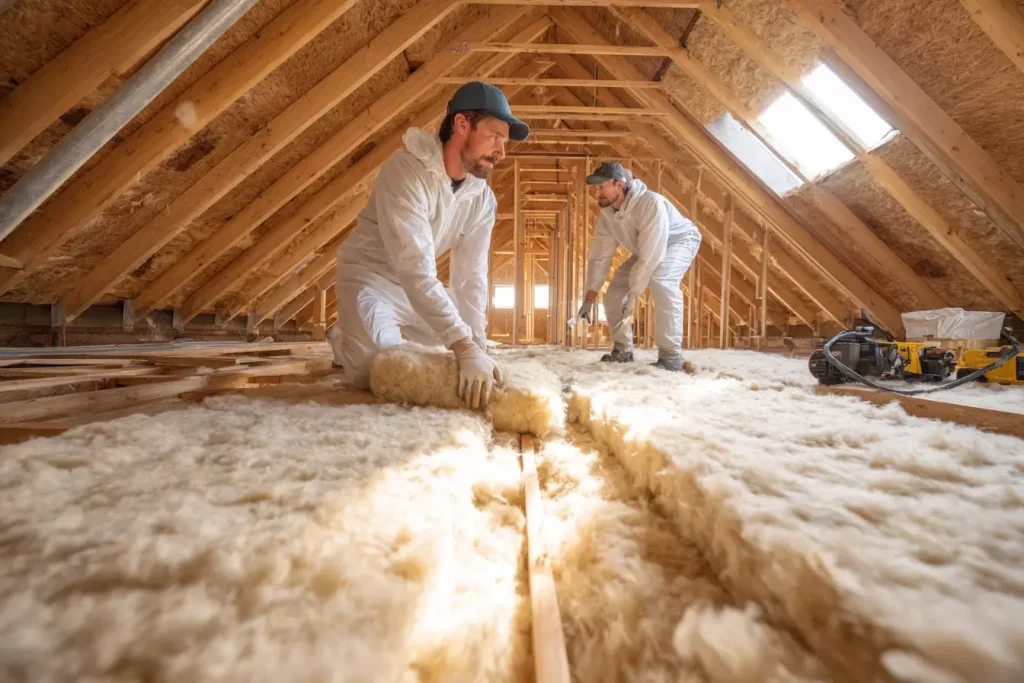
Proper roof insulation and ventilation are crucial investments for any Australian home. Together, they create a comprehensive system that regulates temperature, reduces energy costs, and extends your roof’s lifespan. The right combination of these products can dramatically improve indoor comfort while cutting cooling and heating expenses by up to 30%.
In this comprehensive guide, we’ll explore the top roof insulation and ventilation products available in Australia, helping you make informed decisions based on your specific climate, roof type, and budget considerations. Whether you’re building a new home or upgrading an existing one, these recommendations will help you create an energy-efficient, comfortable living space.
Understanding Insulation and Ventilation: Working Together for Optimal Performance
Before diving into specific products, it’s important to understand how insulation and ventilation work together as a system rather than competing elements.
Insulation’s Role
Roof insulation creates a thermal barrier that slows heat transfer between your home and the outside environment. It works by:
- Trapping air in winter to prevent heat from escaping
- Blocking heat gain during summer months
- Reducing energy consumption year-round
- Creating a more consistent indoor temperature
Ventilation’s Purpose
Proper roof ventilation creates a pathway for air movement that:
- Removes excess heat from the roof space
- Prevents moisture buildup and condensation
- Extends the lifespan of roofing materials
- Improves the efficiency of your insulation
Key Insight: The best roof performance comes from balanced insulation and ventilation working together. Insulation without ventilation can trap moisture and lead to mold, while ventilation without proper insulation won’t deliver energy efficiency.
Top Roof Insulation Products for Australian Homes
We’ve evaluated dozens of insulation products based on R-value, durability, ease of installation, and performance in Australian conditions. Here are our top recommendations:
1. Bradford Gold Ceiling Batts
Bradford Gold Ceiling Batts are a premium glasswool insulation product that delivers excellent thermal performance for Australian homes. Made from recycled glass and renewable materials, these batts are designed specifically for ceiling installation.
4.7 Overall Rating Thermal Performance 4.8 Ease of Installation 4.5 Value for Money 4.7Pros
- High R-values (R2.5 to R7.0 available)
- Non-combustible and fire-resistant
- Excellent acoustic properties
- Doesn’t settle over time
Cons
- Requires protective gear during installation
- Can be irritating to skin and lungs if not handled properly
- Higher initial cost than some alternatives
Best for: Most Australian climates, especially homes with standard pitched roofs and accessible ceiling spaces. Ideal for homeowners wanting long-term performance and fire safety.
Check Current Pricing2. Kingspan Air-Cell Insulbreak
Kingspan Air-Cell Insulbreak is a reflective insulation product that combines a closed-cell foam core with reflective foil surfaces. This multi-layer product is particularly effective in Australia’s hot climates where radiant heat is a major concern.
4.5 Overall Rating Thermal Performance 4.6 Ease of Installation 4.7 Value for Money 4.4Pros
- Excellent radiant heat reflection
- Lightweight and easy to handle
- Water-resistant and doesn’t absorb moisture
- Thin profile saves space
Cons
- Lower R-value than bulk insulation when used alone
- Performance depends on proper air gaps
- Can be damaged by pests
Best for: Metal roofs, cathedral ceilings, and hot climate zones. Particularly effective when space is limited or when retrofitting existing structures.
View Product Details3. Knauf Earthwool Ceiling Insulation
Knauf Earthwool is a mineral wool insulation made with ECOSE Technology, a bio-based binder that contains no formaldehyde. This makes it one of the most environmentally friendly and comfortable-to-handle insulation options available.
4.6 Overall Rating Thermal Performance 4.6 Ease of Installation 4.7 Value for Money 4.5Pros
- Less itchy than traditional fiberglass
- No added formaldehyde or harsh chemicals
- Excellent acoustic properties
- Available in various R-values (R2.5 to R6.0)
Cons
- Slightly more expensive than standard fiberglass
- Can absorb moisture if exposed to leaks
- Requires proper ventilation to prevent condensation
Best for: Environmentally conscious homeowners, those sensitive to traditional fiberglass, and applications where indoor air quality is a priority.
Find Local Suppliers4. Foilboard Insulation
Foilboard combines expanded polystyrene (EPS) with reflective foil facing to create a rigid insulation panel that addresses both conductive and radiant heat transfer. This Australian-made product is particularly effective in our harsh climate conditions.
4.4 Overall Rating Thermal Performance 4.5 Ease of Installation 4.3 Value for Money 4.4Pros
- Combines reflective and bulk insulation benefits
- Rigid panels are easy to cut and fit
- Water-resistant and doesn’t absorb moisture
- Doesn’t sag or settle over time
Cons
- More expensive than basic insulation options
- Requires careful sealing at joints
- Not as environmentally friendly as some alternatives
Best for: New construction, flat or low-pitched roofs, and situations where both thermal and moisture barriers are needed.
Request a QuoteTop Roof Ventilation Products for Maximum Airflow
Proper ventilation works hand-in-hand with insulation to create an energy-efficient roof system. Here are the best ventilation products to complement your insulation:
1. CSR Edmonds Hurricane Ventilators
The Hurricane ventilator is an Australian-made wind-powered roof vent that uses the Venturi effect to create powerful extraction even in light breezes. These “whirlybirds” are a common sight on Australian roofs due to their reliability and effectiveness.
4.8 Overall Rating Ventilation Performance 4.7 Durability 4.9 Value for Money 4.8Pros
- No electricity required – wind-powered
- Extremely durable in harsh Australian conditions
- Low maintenance with 15-year warranty
- Removes up to 100m³ of air per hour
Cons
- Less effective on very still days
- Visible on the roofline
- May create noise if not properly installed
Best for: Most Australian homes, especially in windy areas. Ideal for removing hot air and moisture from roof spaces without ongoing energy costs.
View Hurricane Ventilators2. Bradford Ventilation Solar Star
The Solar Star is a solar-powered roof ventilation fan that combines high extraction rates with zero operating costs. This Australian-designed system uses the sun’s energy to power a high-efficiency fan that actively removes hot air from your roof space.
4.6 Overall Rating Ventilation Performance 4.8 Durability 4.5 Value for Money 4.4Pros
- Powerful extraction (up to 800m³ per hour)
- Works best on hot, sunny days when needed most
- No electricity costs
- Sleek, low-profile design
Cons
- Higher initial cost than passive ventilators
- Less effective on cloudy days
- May require professional installation
Best for: Sunny climate zones, especially in Queensland, Northern Territory, and Western Australia. Ideal for homeowners wanting maximum ventilation without ongoing costs.
Get Installation Quote3. Ampelite Roof Ridge Vents
Ridge vents provide continuous ventilation along the peak of the roof, creating a balanced airflow system when paired with eave vents. Ampelite’s ridge vents are designed specifically for Australian conditions and offer a less visible ventilation solution.
4.5 Overall Rating Ventilation Performance 4.5 Durability 4.6 Value for Money 4.4Pros
- Nearly invisible from ground level
- Provides consistent, even ventilation
- No moving parts to maintain
- Weather-resistant design prevents rain entry
Cons
- Must be installed during roof construction or replacement
- Requires complementary intake vents
- Less effective in very low-wind areas
Best for: New construction or roof replacements where aesthetics are important. Works well in most Australian climate zones when properly paired with intake vents.
Learn More4. Edmonds Windmaster Ventilators
The Windmaster is a premium wind-powered ventilator designed for maximum air extraction in a compact form. With its aerodynamic design and precision bearings, it outperforms standard whirlybirds while maintaining a similar appearance.
4.7 Overall Rating Ventilation Performance 4.7 Durability 4.8 Value for Money 4.6Pros
- Superior airflow capacity (150m³ per hour)
- Starts spinning in very light breezes
- Corrosion-resistant aluminum construction
- 10-year warranty
Cons
- Higher cost than basic whirlybirds
- Still visible on roofline
- May require multiple units for large roof spaces
Best for: Coastal areas and regions with light but consistent breezes. Ideal for homeowners wanting maximum passive ventilation performance.
Find InstallersBuying Guide: How to Choose the Right Products for Your Home
Selecting the optimal insulation and ventilation products requires consideration of several factors specific to your home and climate. Use this guide to make informed decisions:
Calculating Your Insulation Needs
| Australian Climate Zone | Recommended Ceiling R-Value | Recommended Ventilation | Special Considerations |
| Zone 1 (Tropical) | R3.0 – R4.1 | High (powered ventilation) | Focus on reflective insulation and moisture control |
| Zone 2 (Subtropical) | R3.5 – R4.1 | High (ridge vents + whirlybirds) | Balance of bulk and reflective insulation |
| Zone 3 (Hot Arid) | R3.5 – R4.1 | Medium-High | Night purge ventilation important |
| Zone 4 (Warm Temperate) | R3.5 – R5.1 | Medium | Balance heating and cooling needs |
| Zone 5 (Cool Temperate) | R4.1 – R6.0 | Medium-Low | Focus on bulk insulation |
| Zone 6 (Mild Temperate) | R4.1 – R5.1 | Medium | Balanced approach needed |
| Zone 7 (Cool Temperate) | R5.1 – R6.0 | Low-Medium | Heat retention priority |
| Zone 8 (Alpine) | R6.0 – R8.0 | Low (controlled) | Maximum insulation, moisture control |
Signs Your Roof Needs Better Insulation or Ventilation
Insulation Warning Signs
- High energy bills despite efficient appliances
- Significant temperature variations between rooms
- Ceiling feels hot in summer or cold in winter
- Indoor temperatures fluctuate rapidly with weather changes
- Existing insulation is compressed, wet, or damaged
Ventilation Warning Signs
- Excessive heat in the roof space during summer
- Condensation on the underside of roof sheeting
- Mold or mildew growth in the roof space
- Ice dams forming on roof edges in cold regions
- Premature deterioration of roofing materials
Cost vs. ROI Analysis
Investing in quality insulation and ventilation products typically delivers returns through energy savings within 3-7 years, depending on your climate and energy costs. Premium products generally offer faster payback in extreme climates, while standard solutions may be sufficient in milder regions.
Energy Saving Potential: Proper roof insulation and ventilation can reduce cooling and heating costs by 15-30% in most Australian homes. For the average household spending $2,000 annually on temperature control, that represents savings of $300-$600 per year.
Installation Best Practices: DIY vs. Professional Options
The effectiveness of even the best insulation and ventilation products depends significantly on proper installation. Here’s what you need to know:
DIY Installation Considerations
Many homeowners can successfully install basic insulation batts and simple ventilation products like whirlybirds. However, DIY installation comes with important considerations:
- Safety First: Always wear appropriate protective gear including respirator masks, gloves, eye protection, and full-coverage clothing
- Electrical Hazards: Be extremely cautious around electrical wiring in ceiling spaces
- Proper Technique: Avoid compressing insulation batts, which reduces their effectiveness
- Gaps and Coverage: Ensure complete coverage without gaps, which can reduce overall performance by up to 50%
- Ventilation Placement: Follow manufacturer guidelines for optimal positioning of ventilation products
Important Safety Note: If your home was built before 1990, there is a risk of asbestos in existing insulation or ceiling materials. Always have these tested before disturbing them.
Download DIY Installation GuideProfessional Installation Benefits
Professional installation typically costs 30-50% more than DIY but offers significant advantages:
- Expert Assessment: Professionals can identify specific needs and challenges in your roof space
- Complete System Design: Integration of insulation and ventilation for optimal performance
- Quality Assurance: Proper installation techniques that maximize product effectiveness
- Safety Compliance: Adherence to building codes and safety standards
- Warranties: Many manufacturers offer extended warranties with professional installation
- Time Efficiency: What might take a homeowner days can be completed in hours by professionals
Not Sure Which Option Is Right For You?
Our insulation and ventilation experts can help you determine the best products and installation approach for your specific home and budget.
Request Free Consultation
Frequently Asked Questions About Roof Insulation and Ventilation
Can you over-ventilate an attic or roof space?
While it’s technically possible to over-ventilate a roof space, it’s rare in Australian conditions. The primary concern would be in very cold climates where excessive ventilation might reduce the effectiveness of heating. In most Australian homes, more ventilation is generally better, provided it’s balanced between intake and exhaust vents. The exception is bushfire-prone areas, where ember protection measures must be considered in ventilation design.
What’s the lifespan of spray foam insulation compared to batts?
Quality spray foam insulation typically lasts 80+ years without significant degradation, compared to 20-30 years for fiberglass batts. Spray foam maintains its R-value better over time as it doesn’t settle or compress. However, this longevity comes at a higher initial cost—spray foam insulation can cost 2-3 times more than comparable batt insulation. For many homeowners, the extended lifespan and superior air-sealing properties justify the investment.
Should I remove old insulation before installing new products?
It depends on the condition of the existing insulation. If the old insulation is dry, uncompressed, and free from mold, pest infestations, or water damage, you can often add new insulation over it. However, if the existing insulation is wet, moldy, or contaminated with rodent droppings, it should be completely removed before installing new material. When in doubt, have a professional assessment, as contaminated insulation can affect indoor air quality and reduce the effectiveness of new insulation.
How do I know if I need more roof ventilation?
Signs that your roof needs additional ventilation include excessive heat in the roof space during summer (above 50°C), visible condensation on the underside of roofing materials, mold growth, damp insulation, or ice dams in winter. A simple test is to check your roof space temperature on a hot day—if it’s more than 10°C warmer than the outside temperature, additional ventilation would likely be beneficial. For a precise assessment, many insulation companies offer thermal imaging services that can identify ventilation issues.
Are reflective insulation products effective in all Australian climates?
Reflective insulation products like foil barriers are most effective in hot climates where radiant heat is the primary concern. They’re particularly valuable in tropical and subtropical regions of Australia (Zones 1-3). In cooler southern regions, reflective insulation should be used as a complement to bulk insulation rather than a replacement. For best results in mixed climates, consider composite products that combine reflective surfaces with bulk insulation materials to address both radiant and conductive heat transfer.
Making the Right Choice for Your Home
Investing in quality roof insulation and ventilation products is one of the most cost-effective ways to improve your home’s energy efficiency and comfort. By understanding the specific needs of your climate zone and roof type, you can select products that work together as a system rather than individual components.
Remember that even the best products require proper installation to deliver their full benefits. Whether you choose DIY installation for simpler products or professional installation for more complex systems, attention to detail makes all the difference in performance.
For most Australian homes, a combination of high-R-value bulk insulation and appropriate ventilation provides the optimal balance of energy efficiency, moisture control, and comfort. This approach not only reduces energy bills but also extends the life of your roofing materials and creates a healthier indoor environment.
Ready to Improve Your Home’s Efficiency?
Our team of insulation and ventilation specialists can help you select the perfect products for your specific needs and climate zone.
Get Your Free Assessment Today
🏠 Colorbond vs Tile Roofs: Choosing the Right Option for Your Home
Read More »Digital Tools & Drone Technology in Australian Roofing: 2025 Field Guide
Read More »Insurance Claims for Storm Damage: A Homeowner’s Roofing Guide in Australia
Read More »At Roofs.com.au, we are dedicated to providing top-quality roofing services across Australia. With years of experience in the roofing industry, we have earned a reputation for delivering reliable, efficient, and high-quality roofing solutions.
Navigation
Get in Touch
We’d love to hear from you! Whether you need a roof inspection, a free quote, or emergency roof repairs, our team is ready to assist you. Please visit our Contact Page to get in touch with us.
Contact Us Copyright © Roofs.com.au. All Rights Reserved.Roofs.com.au
REQUEST A QUOTE
At Roofs.com.au, we take pride in being responsive, reliable, and ready to solve all your roofing needs. Simply complete the form & one of our team member will be in contact with you shortly.
Request a QuoteRoofs.com.au
Submit your interest
Submit your interest using the form below. We will review your details and get back to you.
Images on This Page
-
https://roofs.com.au/wp-content/uploads/2025/05/roofs.com_.au-logo.png
(no alt text)
-
https://roofs.com.au/wp-content/uploads/2025/08/image-15-1024x683.webp
(no alt text)
-
https://roofs.com.au/wp-content/uploads/2025/05/Why-Choose-Us-2.jpeg
(no alt text)
-
https://roofs.com.au/wp-content/uploads/2025/07/image-19.webp
(no alt text)
-
https://roofs.com.au/wp-content/uploads/2025/07/image-105.webp
(no alt text)
-
https://roofs.com.au/wp-content/uploads/2024/07/roofs.com_.au-logo-2.png
(no alt text)