Insurance Claims for Storm Damage: A Homeowner’s Roofing Guide in Australia
- July 30, 2025
When severe weather strikes your home in Australia, understanding how to navigate insurance claims for storm damage can make all the difference between a smooth recovery and a financial nightmare. From cyclones in Queensland to hailstorms in NSW and Victoria, Australian homes face unique weather challenges that can cause significant roof damage. This comprehensive guide will walk you through the entire process of identifying storm damage, documenting it properly, and successfully lodging an insurance claim to get your roof repaired or replaced with minimal stress and out-of-pocket expenses.
Does Home Insurance Cover Storm Damage in Australia?
Most standard home insurance policies in Australia do cover storm damage, but the specific definition of “storm” and what’s included can vary significantly between insurers. Understanding these nuances before disaster strikes can save you considerable heartache when it’s time to make a claim.
What Qualifies as “Storm Damage” in Australian Policies
Australian insurers typically define a storm as an atmospheric disturbance with violent wind, rain, hail, snow, or lightning. Most policies cover damage directly caused by these weather events, including:
- Wind damage to roofing (missing tiles, damaged gutters)
- Water penetration through storm-damaged areas
- Hail damage to roofing materials
- Damage from falling trees or branches due to storm
- Lightning strikes causing electrical or fire damage
Common Exclusions to Be Aware Of
While storm damage is generally covered, most policies contain important exclusions that homeowners should understand:
Usually Covered
- Sudden and unexpected storm damage
- Emergency temporary repairs
- Water damage from rain entering through storm-created openings
- Removal of fallen trees that have damaged insured property
Usually Not Covered
- Damage due to lack of maintenance (e.g., already leaking roof)
- Gradual deterioration over time
- Damage to retaining walls, fences older than 15 years
- Damage from rising floodwaters (separate flood cover needed)
- Tree removal if no structural damage occurred
Important: The term “Act of God” is rarely used in Australian insurance policies today. Instead, policies specifically list covered events (storm, hail, etc.) and exclusions. Always check your Product Disclosure Statement (PDS) for exact coverage details.
How to Spot Roof Storm Damage
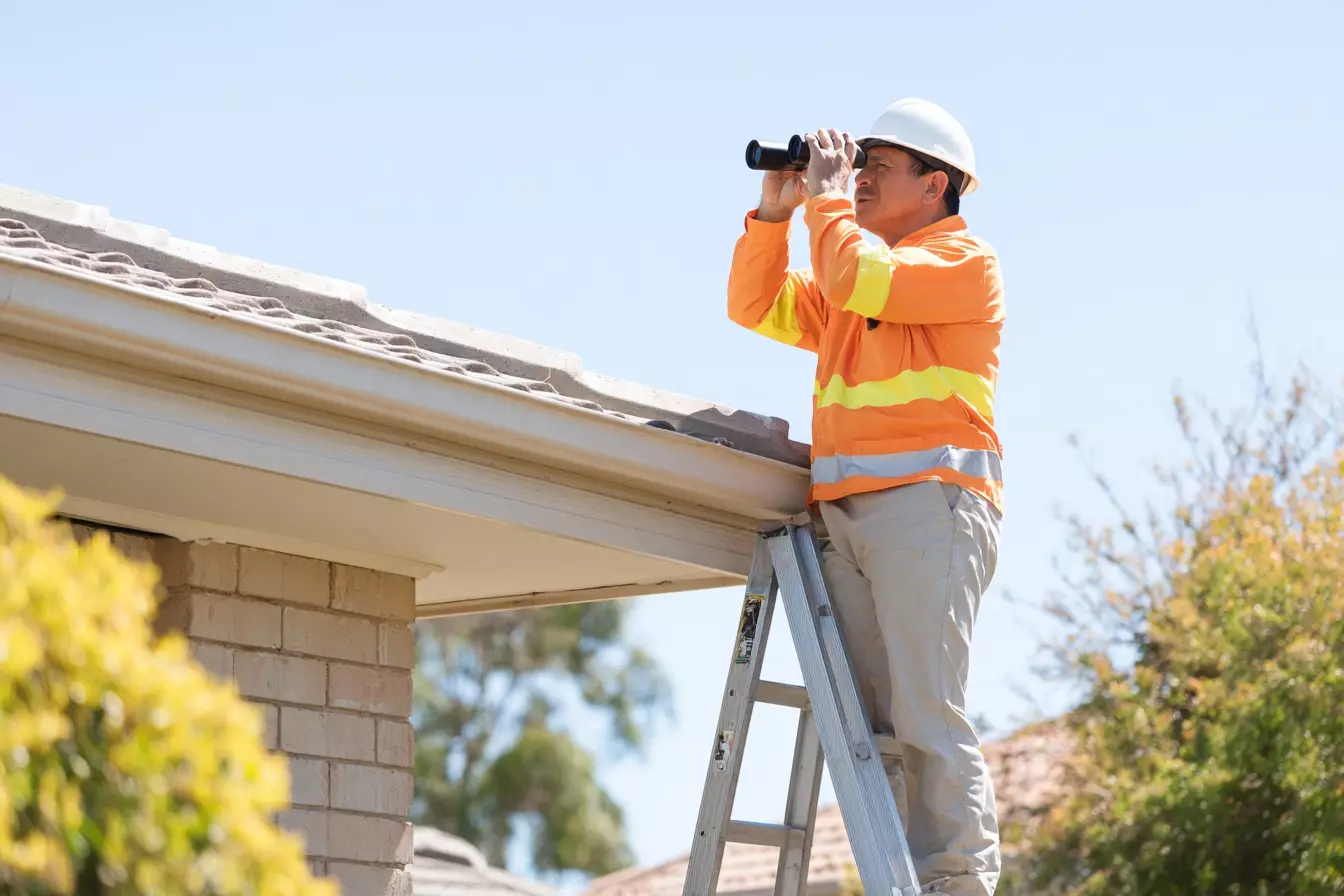
After a severe weather event, it’s crucial to identify roof damage quickly to prevent further issues and strengthen your insurance claim. While a professional inspection is always recommended, here are signs you can look for from ground level:
Exterior Signs of Roof Damage
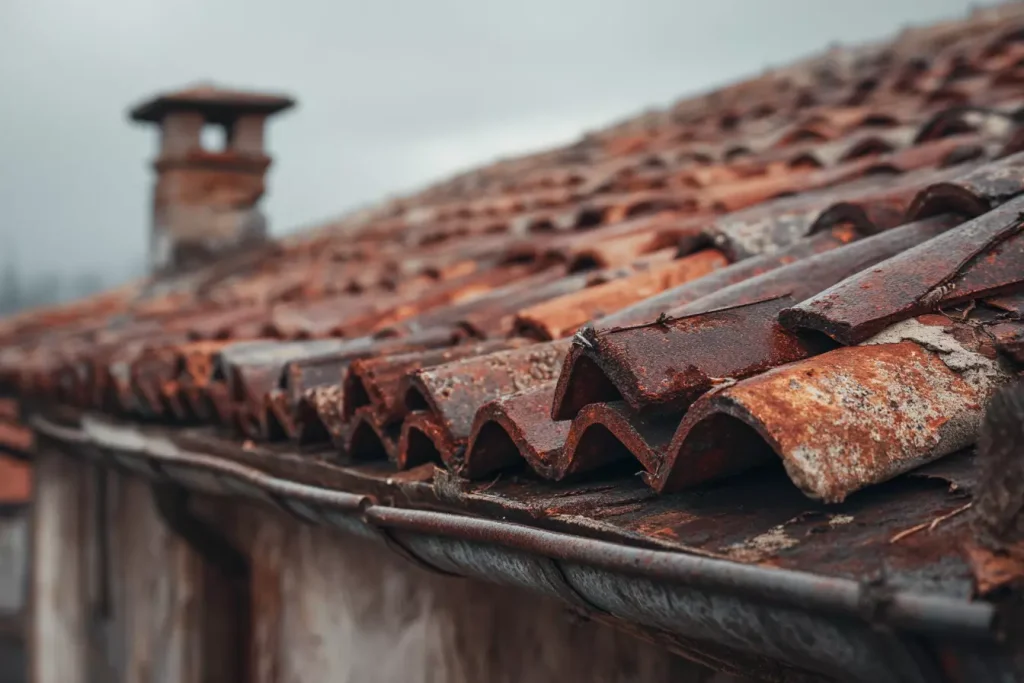
- Missing or damaged tiles/shingles – Look for bare patches or displaced roofing materials
- Dented metal roofing – Particularly common after hailstorms
- Damaged gutters or downpipes – Bent, dented, or separated from the roof
- Debris in gutters – Granules from roof tiles or shingles indicate deterioration
- Damaged flashing – Look for lifted or damaged metal around chimneys and vents
Interior Signs of Roof Damage
- Water stains on ceilings – Yellow or brown discoloration
- Damp spots in the ceiling – Particularly after rain
- Peeling paint or bubbling plaster – Signs of moisture penetration
- Light visible through the roof – Check your ceiling or attic space
- Sagging ceiling sections – Indicates significant water accumulation
Safety First: Never climb onto your roof after a storm. High winds may have weakened structures, and wet roofs are extremely slippery. Conduct visual inspections from the ground using binoculars if possible, or hire a professional.
Need a Professional Roof Inspection?
Don’t risk missing hidden damage that could lead to bigger problems. Our licensed roof inspectors can provide a thorough assessment and documentation for your insurance claim.
Steps to Make an Insurance Claim for Storm Damage
Filing an insurance claim for storm damage requires careful documentation and following specific procedures. Here’s a step-by-step guide to help you navigate the process effectively:
1. Ensure Safety First
Before anything else, ensure everyone’s safety. Stay clear of damaged structures, be aware of fallen power lines, and don’t enter your home if there’s significant structural damage until authorities deem it safe.
2. Document Everything
Thorough documentation strengthens your claim and helps prevent disputes:
- Take dated photos and videos of all visible damage from safe positions
- Make a detailed inventory of damaged items, including brand, model, and approximate value
- Keep samples of damaged materials if possible (e.g., a piece of damaged roof tile)
- Note the date and time of the storm event
- Record conversations with your insurer (date, time, who you spoke with, what was discussed)
3. Prevent Further Damage
Your insurance policy likely requires you to take reasonable steps to prevent additional damage:
- Cover damaged roof areas with tarpaulins (if safe to do so)
- Move undamaged belongings away from leaks
- Place buckets under active leaks
- Remove standing water if possible
Keep receipts for emergency repairs! Reasonable emergency measures to prevent further damage are typically reimbursable under your policy.
4. Contact Your Insurer
Notify your insurance company as soon as possible. Most Australian insurers offer multiple ways to lodge a claim:
Online Claim Lodgment
Many insurers offer online claim forms or mobile apps that let you upload photos and documentation directly. This is often the fastest method and helps avoid phone queues after major storm events.
Phone Claims
Call your insurer’s claims hotline. Have your policy number ready and be prepared to provide details about the damage. After major disasters, phone lines may be busy, so online lodgment might be faster.
5. Meet with the Insurance Assessor
After lodging your claim, your insurer will typically send an assessor to inspect the damage:
- Be present during the assessment if possible
- Point out all areas of damage you’ve identified
- Ask questions about anything you don’t understand
- Take notes during the assessment
- Request a copy of the assessor’s report
6. Get Independent Quotes
While not always necessary, obtaining independent quotes from licensed roofing contractors can be valuable, especially if you disagree with the insurer’s assessment:
- Seek quotes from licensed, reputable roofing contractors
- Ensure quotes detail all required repairs and replacements
- Ask contractors to specify storm-related damage versus pre-existing issues
- Submit these quotes to your insurer if their assessment seems inadequate
7. Review the Claim Outcome
Your insurer will provide a decision on your claim, which may include:
Approval for Repairs
The insurer agrees to pay for repairs, either directly to their preferred supplier or as a payment to you.
Approval for Replacement
If damage is extensive, the insurer may approve full replacement of your roof rather than repairs.
Partial Approval or Rejection
The insurer may approve only certain aspects of your claim or reject it entirely, providing reasons for their decision.
Need Help With Your Claim?
Our team of roofing experts can provide detailed damage reports and help you navigate the insurance claim process for the best possible outcome.
Call 1800 123 456
Request Claim Assistance
Tips to Maximise Your Storm Damage Claim Success
Insurance claims can be complex, but these strategies can help ensure you receive fair compensation for your storm-damaged roof:
Before Storm Season
- Document your home’s condition with dated photos and videos before storm season
- Keep maintenance records to prove your roof was in good condition
- Review your insurance policy to understand coverage limits and exclusions
- Consider additional coverage if you live in a high-risk area (cyclone zones in QLD, hail-prone regions)
- Create a home inventory with photos and receipts of valuable items
During the Claim Process
- Act quickly – Most policies have time limits for reporting damage
- Be thorough in documentation – More evidence strengthens your position
- Keep all communications in writing when possible
- Understand your excess before agreeing to repairs
- Question assessments you disagree with and request detailed explanations
Working With Contractors
Choosing the right roofing contractor is crucial for quality repairs and smooth claim processing:
- Use licensed, insured contractors with experience in insurance work
- Check credentials – In Australia, roofing contractors must have appropriate licenses
- Get detailed, itemized quotes that match insurance scope of works
- Ask about warranties on materials and workmanship
- Confirm they’ll work directly with your insurer if applicable
“The most common mistake homeowners make is accepting the first assessment without question. Insurance companies aim to minimize payouts, while you need complete repairs. Don’t be afraid to advocate for yourself with evidence and expert opinions.”
— Experienced Insurance Claims Specialist
Real-World Examples & Frequently Asked Questions
Understanding how insurance claims work in practice can help you navigate your own situation more effectively. Here are some common scenarios and questions:
Why was my storm damage claim rejected?
Common reasons for claim rejections include:
- Pre-existing damage – Insurers won’t cover damage that existed before the storm
- Lack of maintenance – If your roof was already in poor condition, the claim may be denied
- Policy exclusions – Some types of damage may be specifically excluded in your policy
- Delayed reporting – Not reporting damage promptly can lead to rejection
If your claim is rejected, request a detailed explanation in writing and consider seeking a second opinion from a roofing professional with insurance experience.
Can I claim for damaged gutters and downpipes?
Yes, most Australian home insurance policies cover gutters and downpipes as part of the home structure. Storm damage to these components, including denting from hail or displacement from high winds, is typically covered. However, if gutters were already blocked or in poor condition, the insurer might argue that proper maintenance would have prevented the damage.
What if I’ve already completed emergency repairs?
Most insurers understand that emergency repairs may be necessary to prevent further damage. Keep all receipts and take before/after photos if possible. Your policy likely includes coverage for reasonable emergency repairs, but it’s best to contact your insurer before undertaking major work. If you’ve already completed repairs, provide detailed documentation to your insurer including:
- Photos of the damage before repairs (if available)
- Detailed invoices showing what work was done
- Receipts for all materials and labor
- A statement explaining why emergency repairs were necessary
Will my premium increase after making a storm damage claim?
While individual claims don’t always directly increase premiums, they can affect your claims history, which insurers consider when calculating future premiums. After major storm events, premiums often increase across entire regions regardless of whether individual policyholders made claims. This is because the insurer’s risk assessment for the area changes. If you’re concerned about premium increases, ask your insurer about their policy on premium adjustments following claims before you lodge.
Can I choose my own repairer or must I use the insurer’s preferred supplier?
This depends on your specific policy. Some Australian insurance policies allow you to choose your own repairer, while others require you to use their network of preferred suppliers. Check your Product Disclosure Statement (PDS) for details. If you prefer to use your own repairer but your policy restricts this, you can:
- Request an exception (especially if you have concerns about the quality of the insurer’s contractors)
- Ask if you can pay any difference in cost if your preferred repairer charges more
- Consider accepting a cash settlement if offered, which may allow you to arrange repairs independently
Preventing Future Storm Damage to Your Roof
While you can’t control the weather, you can take proactive steps to minimize potential storm damage to your roof:
Regular Maintenance
- Schedule professional roof inspections twice yearly
- Clean gutters and downpipes quarterly
- Replace damaged tiles or sheets promptly
- Check and maintain roof flashing around chimneys and vents
- Ensure proper attic ventilation to prevent moisture buildup
Storm-Resistant Upgrades
- Install cyclone-rated roofing materials in high-risk areas
- Use impact-resistant tiles or metal in hail-prone regions
- Add roof strapping to strengthen connections
- Install gutter guards to prevent blockages
- Consider a secondary water barrier beneath roofing materials
Pre-Storm Preparations
- Trim overhanging branches before storm season
- Secure loose roofing materials
- Check for and repair existing leaks
- Store outdoor furniture that could become projectiles
- Review and update your insurance coverage
Regional Considerations: Different Australian regions face different risks. Northern Queensland homes should prioritize cyclone resistance, while properties in NSW and Victoria might focus more on hail protection. Consult with local roofing experts familiar with regional weather patterns.
Conclusion: Taking Control of Your Storm Damage Claim
Dealing with roof storm damage can be stressful, but understanding the insurance claim process empowers you to advocate for fair treatment. Remember these key points:
- Document everything thoroughly from the moment damage occurs
- Act quickly to prevent further damage and report to your insurer
- Understand your policy coverage and exclusions
- Consider professional assistance for complex claims
- Maintain your roof regularly to prevent claim rejections
By following the steps outlined in this guide, you’ll be well-equipped to navigate the insurance claims process for storm damage and restore your home with minimal financial stress.
Need Expert Help With Your Storm Damage?
Our licensed roofing professionals can assess your damage, provide detailed documentation for your insurer, and help you navigate the entire claims process.
Call 1800 123 456
Book Your Free Roof Inspection
Roof Inspection Checklist: Essential Guide for Australian Homeowners
Read More »DIY Roof Inspection Tips & Safety for Australian Homeowners: 2025 Step‑by‑Step Guide
Read More »Preserving History: A Heritage Roof Restoration Case Study in Sydney
Read More »At Roofs.com.au, we are dedicated to providing top-quality roofing services across Australia. With years of experience in the roofing industry, we have earned a reputation for delivering reliable, efficient, and high-quality roofing solutions.
Navigation
Get in Touch
We’d love to hear from you! Whether you need a roof inspection, a free quote, or emergency roof repairs, our team is ready to assist you. Please visit our Contact Page to get in touch with us.
Contact Us Copyright © Roofs.com.au. All Rights Reserved.Roofs.com.au
REQUEST A QUOTE
At Roofs.com.au, we take pride in being responsive, reliable, and ready to solve all your roofing needs. Simply complete the form & one of our team member will be in contact with you shortly.
Request a QuoteRoofs.com.au
Submit your interest
Submit your interest using the form below. We will review your details and get back to you.
Images on This Page
-
https://roofs.com.au/wp-content/uploads/2025/05/roofs.com_.au-logo.png
(no alt text)
-
https://roofs.com.au/wp-content/uploads/2025/07/image-106-1024x683.webp
(no alt text)
-
https://roofs.com.au/wp-content/uploads/2025/07/image-107-1024x683.webp
(no alt text)
-
https://roofs.com.au/wp-content/uploads/2025/07/image-108-1024x683.webp
(no alt text)
-
https://roofs.com.au/wp-content/uploads/2025/07/image-109-1024x683.webp
(no alt text)
-
https://roofs.com.au/wp-content/uploads/2025/07/image-110-1024x683.webp
(no alt text)
-
https://roofs.com.au/wp-content/uploads/2025/05/Roof-Inspection.jpg
(no alt text)
-
https://roofs.com.au/wp-content/uploads/2025/07/image-25.webp
(no alt text)
-
https://roofs.com.au/wp-content/uploads/2025/08/image.webp
(no alt text)
-
https://roofs.com.au/wp-content/uploads/2024/07/roofs.com_.au-logo-2.png
(no alt text)