Roof Fasteners in Coastal Zones: Coatings, Corrosion Categories & Failure Modes
- September 24, 2025
Coastal environments present unique challenges for building materials, particularly roof fasteners. The combination of salt spray, high humidity, and intense UV exposure creates a perfect storm for accelerated corrosion. For property owners, architects, and construction managers, selecting the right fasteners isn’t just about immediate costs—it’s about long-term structural integrity and avoiding costly premature replacements.
In this comprehensive guide, we’ll examine the specific requirements for roof fasteners in coastal zones, compare various coating options, break down corrosion categories, and identify common failure modes. By the end, you’ll have a clear understanding of what to specify for your coastal building projects to ensure maximum durability and value.
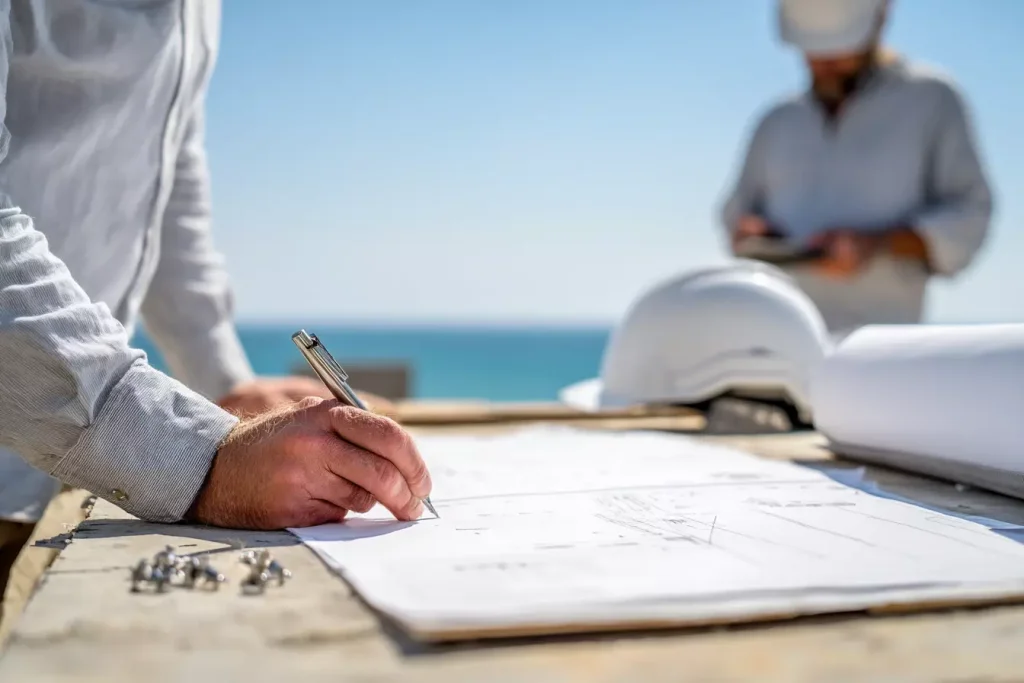
Coastal environments expose roof fasteners to extreme conditions including salt spray, high humidity, and UV radiation
The Unique Challenges of Coastal Environments
Coastal zones create some of the most aggressive environments for building materials. Understanding these challenges is the first step in selecting appropriate fasteners:
- Salt Spray Exposure: Airborne salt particles can travel up to 50km inland, depositing on roof surfaces and accelerating corrosion of metal fasteners.
- Elevated Humidity Levels: Coastal regions typically experience humidity levels above 70%, creating persistent moisture that promotes oxidation.
- Intense UV Radiation: Many coastal areas receive stronger UV exposure, which can break down protective coatings and accelerate degradation.
- Cyclical Temperature Changes: Daily temperature fluctuations cause expansion and contraction, stressing fastener connections.
- Strong Winds: Coastal areas often experience higher wind loads, placing additional stress on fastening systems.
These factors combine to create what corrosion engineers classify as C5-M (marine) environments—among the most severe corrosion categories in the ISO 9223 standard. In these conditions, standard fasteners can begin to fail within months, not years.
Coatings for Coastal Fasteners
The coating on a fastener provides its primary defense against corrosion. Different coating technologies offer varying levels of protection in coastal environments:
| Coating Type | Protection Level | Lifespan in C5-M Zone | ASTM Standard | Best Applications |
| Hot-Dip Galvanized | Moderate | 1-3 years | A153/A153M | Temporary structures, 5+ km from shoreline |
| Mechanically Galvanized | Moderate | 1-2 years | B695 | Interior components, protected areas |
| 304 Stainless Steel | High | 10-15 years | A276 | General coastal use, 1-3 km from shoreline |
| 316 Stainless Steel | Very High | 25+ years | A276 | Direct shoreline exposure, critical applications |
| Polymer-Coated | High | 7-12 years | F1136 | Visible fasteners, color-matching requirements |
| Aluminum-Zinc Alloy | High | 5-10 years | A792 | Metal roofing systems, moderate coastal exposure |
Salt-Spray Testing Standards
When evaluating fastener coatings, look for products that have been tested according to established standards:
- ASTM B117: The standard salt spray test. For coastal applications, look for fasteners that have survived at least 1,000 hours.
- AAMA 2605: High-performance exterior coating standard requiring 4,000+ hours of salt spray resistance.
- ISO 9227: International standard for salt spray testing, with specific protocols for different coating types.
Expert Tip: Don’t rely solely on manufacturer claims. Request actual test results showing hours of salt spray resistance according to recognized standards. For critical coastal applications, specify fasteners that have survived 3,000+ hours in ASTM B117 testing.
Understanding Corrosion Categories for Coastal Roofing
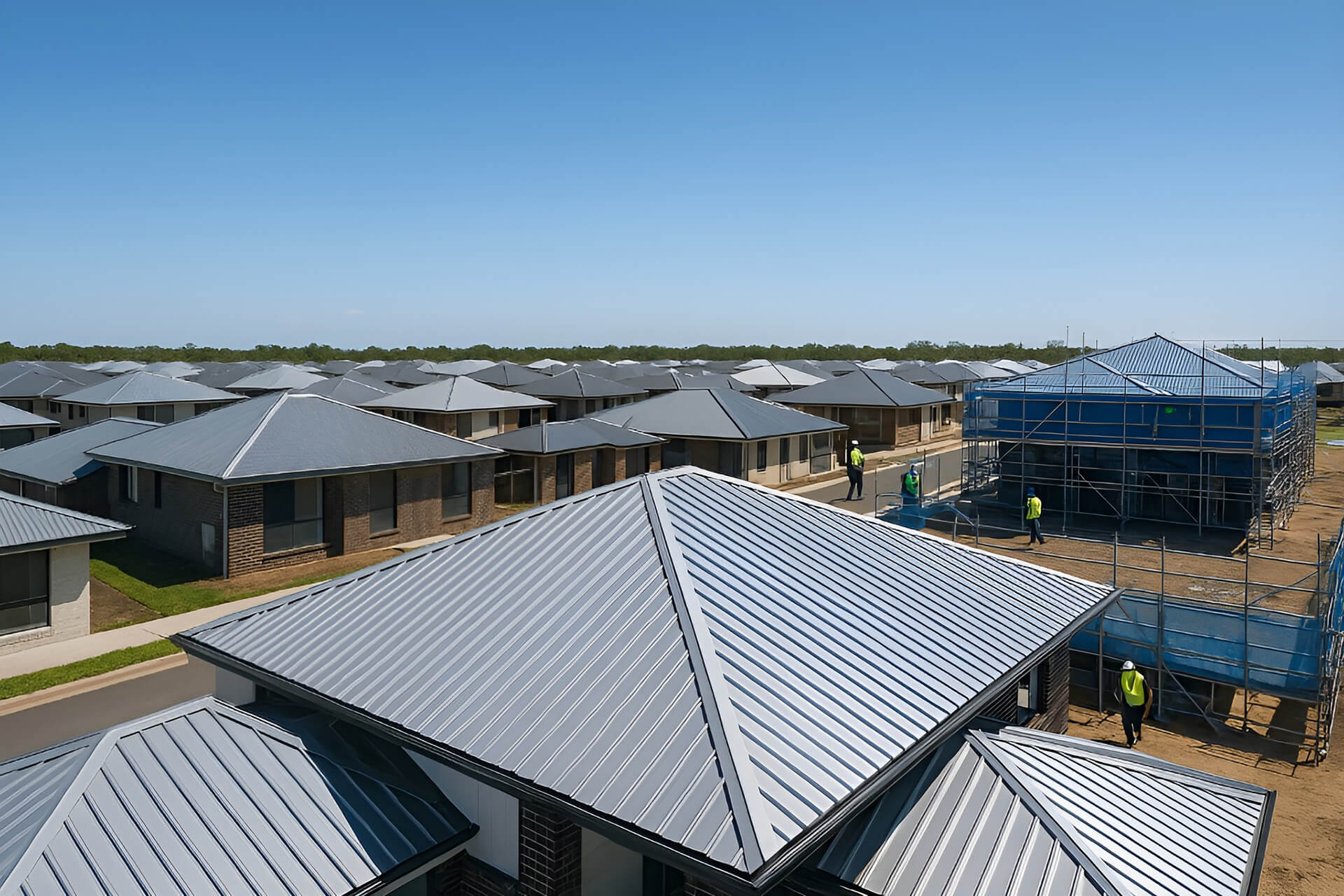
Corrosion severity zones along the Australian coastline from C3 (inland) to C5-M (immediate shoreline)
The ISO 9223 standard defines corrosion categories that help specify appropriate materials for different environments. Understanding these categories is crucial for selecting the right fasteners for your specific coastal location:
C3 (Medium) Corrosion Category
Typical Location: 10-50km from coastline
- Moderate salt contamination
- Moderate humidity levels
- Low to medium corrosion risk
Fastener Specifications:
- Hot-dip galvanized (G90/Z275) minimum
- Class 3 coating per AS 3566.2
- Mechanically plated fasteners acceptable
- 304 stainless steel for critical applications
C4 (High) Corrosion Category
Typical Location: 1-10km from coastline
- High salt contamination
- Elevated humidity levels
- Medium to high corrosion risk
Fastener Specifications:
- Class 4 coating per AS 3566.2
- 304 stainless steel recommended
- Bi-metallic compatibility required
- Sealed washers mandatory
- Regular inspection every 2-3 years
C5-M (Marine) Corrosion Category
Typical Location: Immediate coastline to 1km inland
- Extreme salt contamination
- High humidity with salt spray
- Very high corrosion risk
Fastener Specifications:
- 316 stainless steel mandatory
- Monel or silicon bronze alternatives
- EPDM washers with UV protection
- Isolation from dissimilar metals
- Annual inspection recommended
- Documented maintenance program
Important: Corrosion categories can vary within short distances in coastal areas. Factors like prevailing winds, topography, and sheltering can create microclimates with different corrosion rates. When in doubt, specify materials for the next higher category.
Common Failure Modes in Coastal Fasteners
Failed fasteners showing typical corrosion patterns after exposure to coastal conditions
Understanding how and why fasteners fail in coastal environments can help you select appropriate products and implement effective maintenance strategies:
Rust Penetration
The most common failure mode in coastal fasteners is rust penetration through the protective coating. This typically begins at edges, threads, or points of mechanical damage where the base metal becomes exposed.
- Early Signs: Red-brown staining around fastener heads
- Progression: Coating blistering, followed by flaking and exposure of base metal
- Prevention: Specify thicker coatings or inherently corrosion-resistant materials like 316 stainless steel
Thread Degradation
Fastener threads are particularly vulnerable to corrosion due to their high surface area and the mechanical stresses they experience.
- Early Signs: Difficulty in removal during maintenance
- Progression: Thread stripping, fastener seizure, or complete thread dissolution
- Prevention: Use fasteners with thread-specific coatings or full-body stainless steel construction
Cyclic Loading Failure
Coastal environments subject roofs to significant wind loads, causing fasteners to experience repeated stress cycles that can lead to loosening or fatigue failure.
- Early Signs: Loose fasteners, squeaking noises during wind events
- Progression: Fastener backing out, enlarged holes, potential roof panel detachment
- Prevention: Specify fasteners with thread-locking features or self-sealing capabilities
Real-World Examples
“Following Cyclone Debbie in 2017, our inspection of 42 coastal properties revealed that 78% of roof failures involved fastener corrosion that pre-dated the storm. In most cases, fasteners had been in place less than 5 years but were incorrectly specified for the marine environment.”
— Queensland Building Inspection Report, 2018
Post-storm inspection showing roof panel displacement due to fastener failure in a C5-M zone
In another case study from the Gold Coast, a luxury beachfront property required complete re-roofing after just four years due to extensive fastener failure. Investigation revealed that while the roof panels were appropriate for marine environments, the contractor had used standard galvanized fasteners instead of the specified 316 stainless steel. The repair cost exceeded $120,000—more than ten times the cost difference between the correct and incorrect fasteners.
What Owners Should Specify
Proper specification of fasteners is critical for coastal building longevity
To ensure your coastal building project uses appropriate fasteners, include these specific requirements in your project documentation:
Procurement Checklist
- Material Certification: Require mill certificates confirming the exact grade of stainless steel or coating specification
- Testing Documentation: Specify minimum salt spray test results (e.g., “Must meet ASTM B117 3,000-hour salt-spray test”)
- Compatibility Verification: Require documentation that fasteners are compatible with roofing materials to prevent galvanic corrosion
- Australian Standards Compliance: Specify compliance with AS 3566.2 for the appropriate corrosion category
- Warranty Requirements: Specify minimum warranty periods (10+ years for C5-M environments)
- Sample Submission: Require physical samples before bulk ordering
Installation Requirements
- Torque Specifications: Define appropriate installation torque to prevent over-tightening
- Sealing Requirements: Specify appropriate washers and sealing methods
- Isolation Procedures: Detail methods for preventing contact between dissimilar metals
- Weather Limitations: Specify acceptable installation conditions (temperature, humidity)
- Quality Control: Require photographic documentation of installed fasteners
Maintenance Schedule
Regular inspection and maintenance are essential for fastener longevity in coastal environments
Include a detailed maintenance schedule in your building documentation:
| Corrosion Zone | Inspection Frequency | Recommended Actions |
| C3 (Medium) | Every 3 years | Visual inspection, spot-check torque on 5% of fasteners |
| C4 (High) | Every 2 years | Visual inspection, torque testing, replacement of any fasteners showing corrosion |
| C5-M (Marine) | Annually | Comprehensive inspection, washing with fresh water, proactive replacement of any fasteners showing early signs of corrosion |
Cost vs. Durability: Making the Right Investment
The initial cost difference between standard and marine-grade fasteners is minimal compared to replacement costs
When evaluating fastener options for coastal buildings, consider the total lifecycle cost rather than just the initial purchase price:
Premium Fastener Benefits
- Extended service life (20+ years vs. 2-5 years)
- Reduced maintenance requirements
- Lower risk of catastrophic failure during extreme weather
- Protection of the entire roofing system
- Higher property value and reduced insurance risks
Standard Fastener Limitations
- Frequent replacement costs (labor + materials)
- Potential damage to roof panels during replacement
- Risk of water ingress and structural damage
- Building downtime during repairs
- Potential voiding of roofing system warranties
The cost premium for 316 stainless steel fasteners typically adds just 0.5-1.5% to the total roofing budget but can extend the maintenance-free life of the fastening system by 5-10 times in coastal environments. This represents one of the highest ROI opportunities in coastal construction.
Need Expert Guidance on Coastal Fastener Specifications?
Our team specializes in corrosion-resistant fastening systems for Australian coastal environments. Contact us for a consultation on your specific project requirements.
Request a Consultation
Frequently Asked Questions
Can I use standard roofing fasteners if my property is 5km from the coast?
While properties 5km from the coast typically fall into the C4 rather than C5-M corrosion category, standard fasteners are still not recommended. At this distance, you should specify at minimum Class 4 coated fasteners per AS 3566.2, with 304 stainless steel being preferable for longer service life. Local topography and prevailing winds can create “salt corridors” that extend corrosive conditions further inland than expected.
Are polymer-coated fasteners a good alternative to stainless steel?
Polymer-coated fasteners can provide good corrosion resistance in coastal environments, particularly when you need color matching with roof panels. However, they typically don’t match the longevity of 316 stainless steel in severe marine environments. If you choose polymer-coated fasteners, ensure they meet ASTM F1136 standards with at least 1,000 hours of salt spray resistance, and be prepared for more frequent inspection and maintenance.
How can I identify what type of fasteners are currently on my coastal property?
A simple field test is to use a magnet—stainless steel fasteners are typically non-magnetic or only slightly magnetic. However, for definitive identification, we recommend having a professional roofing inspector assess your fasteners. They can identify the specific type, evaluate their condition, and recommend appropriate replacements if needed. This is particularly important if you’re experiencing any leaks or visible corrosion.
Roof Repair vs. Replacement: Making the Right Choice for Your Home
Read More »7 Early Warning Signs Your Roof Needs Attention (Before It Leaks)
Read More »Roofing Costs in Australia: What to Expect in 2025
Read More »At Roofs.com.au, we are dedicated to providing top-quality roofing services across Australia. With years of experience in the roofing industry, we have earned a reputation for delivering reliable, efficient, and high-quality roofing solutions.
Navigation
Get in Touch
We’d love to hear from you! Whether you need a roof inspection, a free quote, or emergency roof repairs, our team is ready to assist you. Please visit our Contact Page to get in touch with us.
Contact Us Copyright © Roofs.com.au. All Rights Reserved.Roofs.com.au
REQUEST A QUOTE
At Roofs.com.au, we take pride in being responsive, reliable, and ready to solve all your roofing needs. Simply complete the form & one of our team member will be in contact with you shortly.
Request a QuoteRoofs.com.au
Submit your interest
Submit your interest using the form below. We will review your details and get back to you.
Images on This Page
-
https://roofs.com.au/wp-content/uploads/2025/05/roofs.com_.au-logo.png
(no alt text)
-
https://roofs.com.au/wp-content/uploads/2025/09/image-39-1024x683.webp
(no alt text)
-
https://roofs.com.au/wp-content/uploads/2025/09/image-40-1024x683.webp
(no alt text)
-
https://roofs.com.au/wp-content/uploads/2025/09/image-41-1024x683.webp
(no alt text)
-
https://roofs.com.au/wp-content/uploads/2025/05/Testimonials-2.jpg
(no alt text)
-
https://roofs.com.au/wp-content/uploads/2025/06/House-with-visible-early-warning-signs-of-roof-damage-including-missing-shingles-and-sagging.jpeg
House with visible early warning signs of roof damage including missing shingles and sagging sections
-
https://roofs.com.au/wp-content/uploads/2025/05/Licensing-Insurance.jpeg
(no alt text)
-
https://roofs.com.au/wp-content/uploads/2024/07/roofs.com_.au-logo-2.png
(no alt text)