Gutter Cleaning & Roof Drainage Maintenance in Australia: 2025 Complete Guide
- July 15, 2025
Effective gutter cleaning and roof drainage Australia systems are your home’s first line of defense against water damage. With the Bureau of Meteorology reporting increasingly intense rainfall events across Australia, maintaining clear gutters has never been more critical. Blocked gutters during storm events can lead to overflowing water, damaged foundations, and costly repairs. This comprehensive guide will help you understand why gutter maintenance matters, how to perform it safely, and when to call in the professionals.
Why Clean Gutters and Proper Roof Drainage Matter
Your home’s gutter system plays a crucial role in directing rainwater away from your property. When gutters become clogged with leaves, debris, and dirt, water can’t flow properly, leading to a cascade of potential problems. According to CSIRO research on water run-off, even a partially blocked gutter can reduce drainage efficiency by up to 70%, significantly increasing the risk of water damage.
Consequences of Poor Gutter Maintenance
- Foundation damage from water pooling around your home
- Fascia and soffit rot due to constant moisture exposure
- Roof leaks causing internal ceiling and wall damage
- Landscape erosion from concentrated water flow
- Mould and mildew growth in damp areas
- Pest infestations in debris-filled gutters
Regular maintenance not only protects your property but can also save you thousands in repair costs. A professional roof inspection can identify potential issues before they become major problems, particularly after severe weather events.
Australian Rainfall Patterns and Gutter Demands
Australia’s diverse climate zones create unique challenges for roof drainage systems. The latest data from the Bureau of Meteorology shows increasing rainfall intensity in many regions, with some areas experiencing more than 100mm of rain in a single hour during storm events.
Australian rainfall intensity map showing high-risk areas for gutter and roof drainage systems. Source: Bureau of Meteorology
Regional Considerations for Gutter Cleaning
| Climate Zone | Rainfall Pattern | Recommended Cleaning Frequency | Special Considerations |
| Tropical North | Heavy monsoon rains (Dec-Mar) | Quarterly | Larger downpipes recommended |
| Subtropical East Coast | Summer storms, consistent rainfall | 3 times yearly | High leaf-fall areas need guards |
| Temperate South | Winter rainfall dominant | Twice yearly | Check before winter rains |
| Arid Interior | Infrequent but intense storms | Annually | Dust buildup can cement in gutters |
Understanding Your Roof Drainage System Components
Before tackling gutter cleaning, it’s important to understand the components that make up your roof drainage system. Each part plays a specific role in channeling water away from your home.
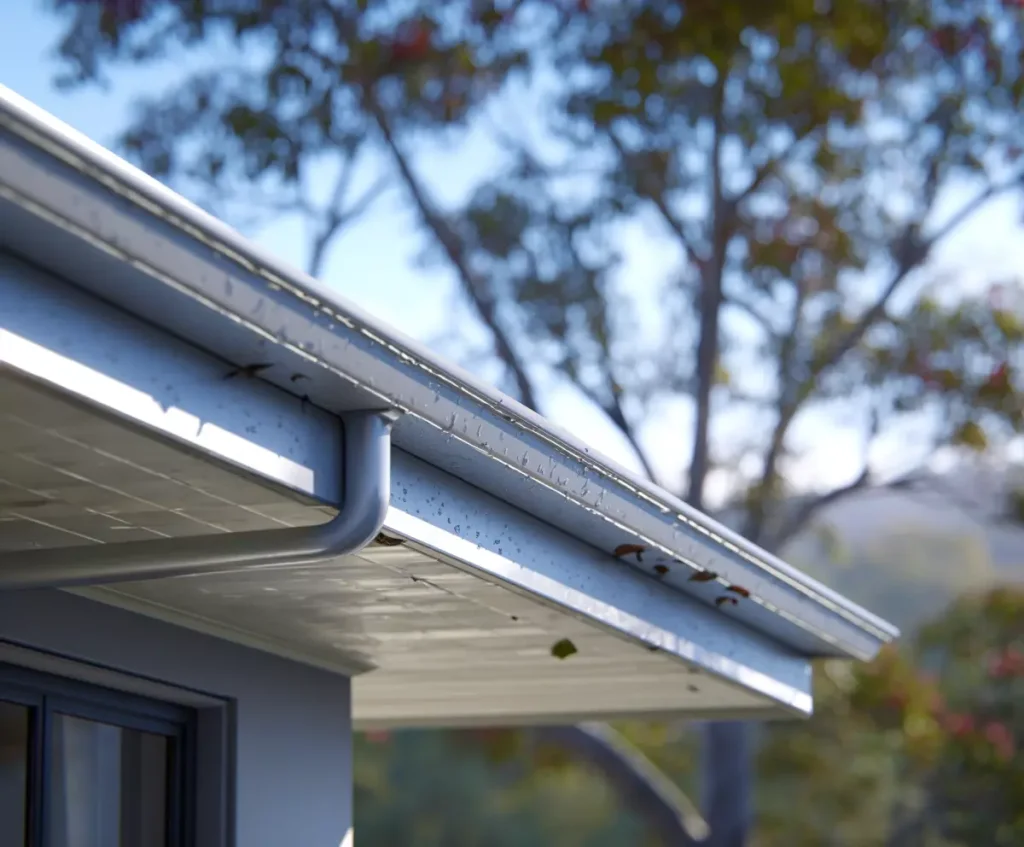
Gutter Profiles
Australia commonly uses three main gutter profiles:
- Quad gutters: Popular for their aesthetic appeal and water capacity
- Half-round gutters: Traditional design with excellent water flow
- Box gutters: Used for high-volume water handling in commercial buildings
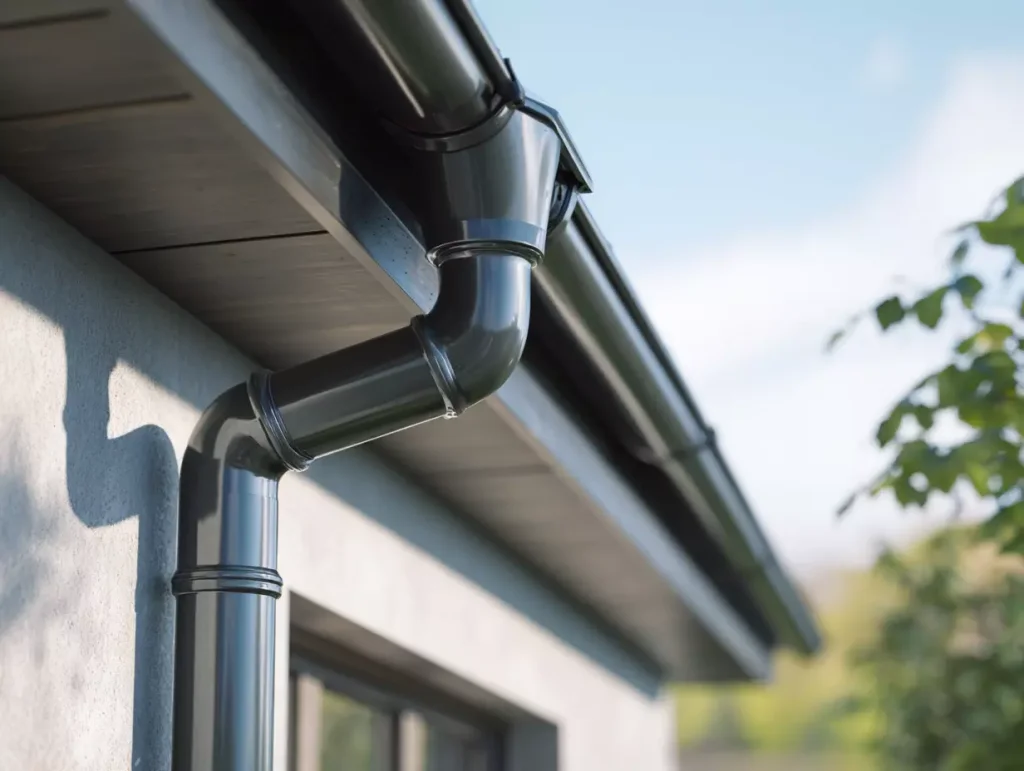
Downpipes & Fittings
Critical for vertical water transport:
- Downpipes: Available in round, rectangular and square profiles
- Sumps/rain heads: Prevent downpipe overflow during heavy rain
- Splash blocks: Direct water away from foundations
- Connectors: Join gutters to downpipes securely
Leaf Protection
Prevent blockages before they start:
- Leaf diverters: Deflect leaves away from gutters
- Gutter guards: Screen out debris while allowing water through
- Leaf stopper systems: Integrated solutions for complete protection
Seasonal Gutter Cleaning & Inspection Checklist
Regular maintenance is key to preventing gutter problems. According to Safe Work Australia, falls from ladders during home maintenance are a leading cause of serious injuries. Always prioritize safety when cleaning gutters.
Essential Safety Equipment
- Sturdy ladder with stabilizers (never lean ladders against gutters)
- Non-slip footwear with good traction
- Heavy-duty gloves to protect against sharp debris
- Safety glasses to shield eyes from dirt and water
- Garden hose with spray nozzle attachment
- Plastic scoop or small garden trowel
- Bucket for collecting debris
Cleaning Frequency by Climate Zone
For most Australian homes, cleaning gutters twice yearly is sufficient—once in late autumn after leaves have fallen and again in early spring before the storm season. However, homes near trees or in high-rainfall areas may require more frequent attention. Consider roof maintenance plans that include regular gutter cleaning to ensure consistent care.
“The most common mistake homeowners make is waiting until gutters are visibly overflowing before cleaning them. By then, damage may already be occurring to fascia boards and roof structures.”
— Australian Institute of Building Surveyors
Gutter Guard Options for Australian Conditions
Installing gutter guards can significantly reduce maintenance frequency and prevent blockages. Different systems suit different Australian environments and budgets.
| Type | Lifespan | Cost/m² | Best Climate | Pros | Cons |
| Mesh | 15 years | $8–$12 | High leaf-fall | Durable, allows high water flow | Small seeds can penetrate |
| Foam | 5 years | $6–$9 | Low debris | Easy DIY installation | Can harbor mould, shorter lifespan |
| Brush | 10 years | $10–$15 | Moderate rainfall | Simple installation, good for snow | Requires periodic cleaning |
| Integrated Systems | 20+ years | $15–$25 | All Australian climates | Complete protection, professional finish | Higher cost, professional installation |
When selecting gutter guard Australia options, consider your local environment, tree coverage, and rainfall patterns. Professional installation ensures proper fit and maximum effectiveness for integrated systems.
Drainage Design & Compliance Requirements
Australian buildings must comply with specific standards for roof drainage systems. The National Construction Code (NCC) 2022 Part 3.5.2 and AS/NZS 3500.3 outline requirements for effective water management.
Downpipe Sizing Requirements
Proper sizing is critical for effective drainage. The NCC specifies minimum downpipe dimensions based on roof catchment area and rainfall intensity:
- For every 100m² of roof area, you need at least one 100mm round downpipe
- Rectangular downpipes must have equivalent cross-sectional area
- High-rainfall areas require additional capacity
- Maximum spacing between downpipes should not exceed 12 meters
Overflow Measures
To prevent water ingress during heavy rainfall, the NCC requires overflow measures such as:
- Rain heads/sumps with built-in overflow provisions
- Spreaders to distribute water flow across wider areas
- Overflow slots in gutters to direct excess water away from the building
- Additional downpipes in high-rainfall areas
Stormwater Discharge Rules: Local councils throughout Australia have specific requirements for stormwater discharge. Generally, water must be directed to designated drainage points and not onto neighboring properties. Check with your local council before making any changes to your drainage system.
DIY Gutter Cleaning: Step-by-Step Guide
For those comfortable working at heights, DIY gutter cleaning can be an effective way to maintain your roof drainage system. Always follow safety guidelines and know when to call professionals.
- Safety first: Set up your ladder on stable ground with a spotter if possible. Never lean ladders directly against gutters.
- Remove large debris: Using gloves and a scoop, remove leaves and large debris, placing them in a bucket or drop cloth below.
- Flush with water: Use a garden hose to flush remaining dirt toward downpipes, checking for proper flow.
- Clear downpipes: If water backs up, the downpipe may be clogged. Use a plumber’s auger or high-pressure hose to clear blockages.
- Check for damage: Inspect gutters for rust, cracks, sagging, or loose brackets and repair as needed.
- Test the system: Run water through the cleaned gutters to ensure proper drainage and identify any remaining issues.
When to Call the Professionals
Consider booking professional gutter cleaning services if:
- Your home is two stories or taller
- You have physical limitations or fear of heights
- Your roof has a steep pitch (greater than 4:12)
- Gutters show signs of damage needing repair
- You discover pest infestations in your gutters
- It’s been more than a year since the last cleaning
Complete Roof Drainage Maintenance Checklist
Comprehensive gutter maintenance extends beyond just cleaning. These additional tasks ensure your entire roof drainage system functions effectively:
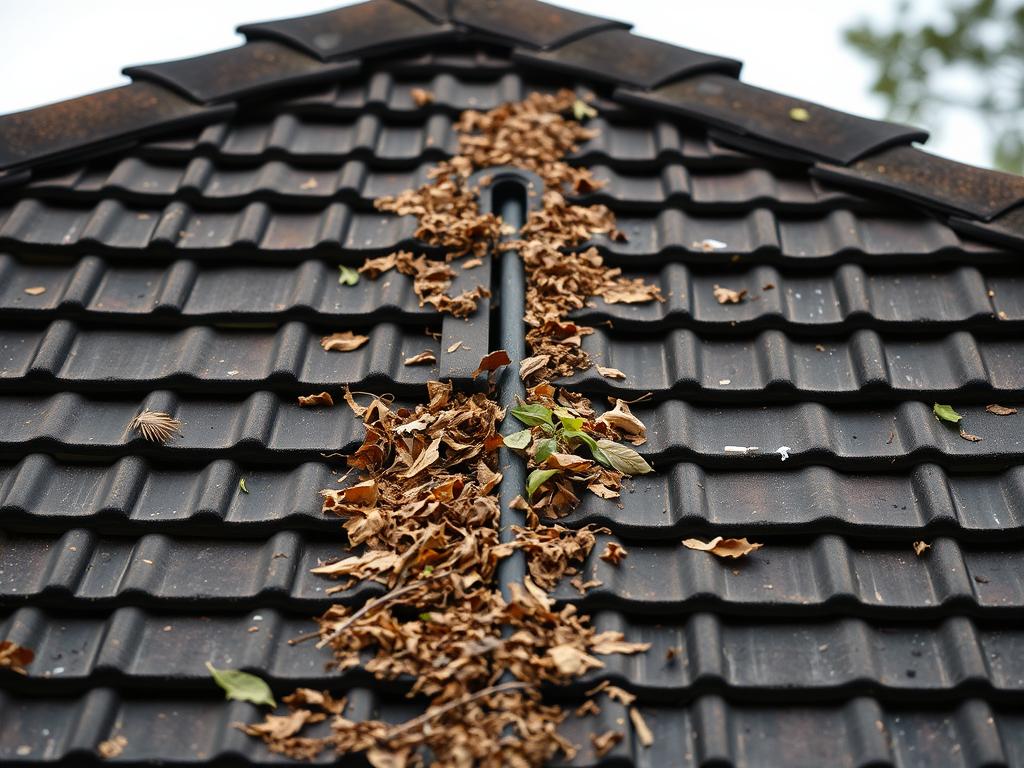
Roof Valley Cleaning
Roof valleys collect debris and can cause water to back up under tiles or sheets. Clean valleys annually using a soft brush or leaf blower, being careful not to damage valley flashings.
Moss & Algae Removal
Moss and algae can restrict water flow and damage roofing materials. Use appropriate treatments to remove growth and prevent recurrence, especially in shaded or humid areas.
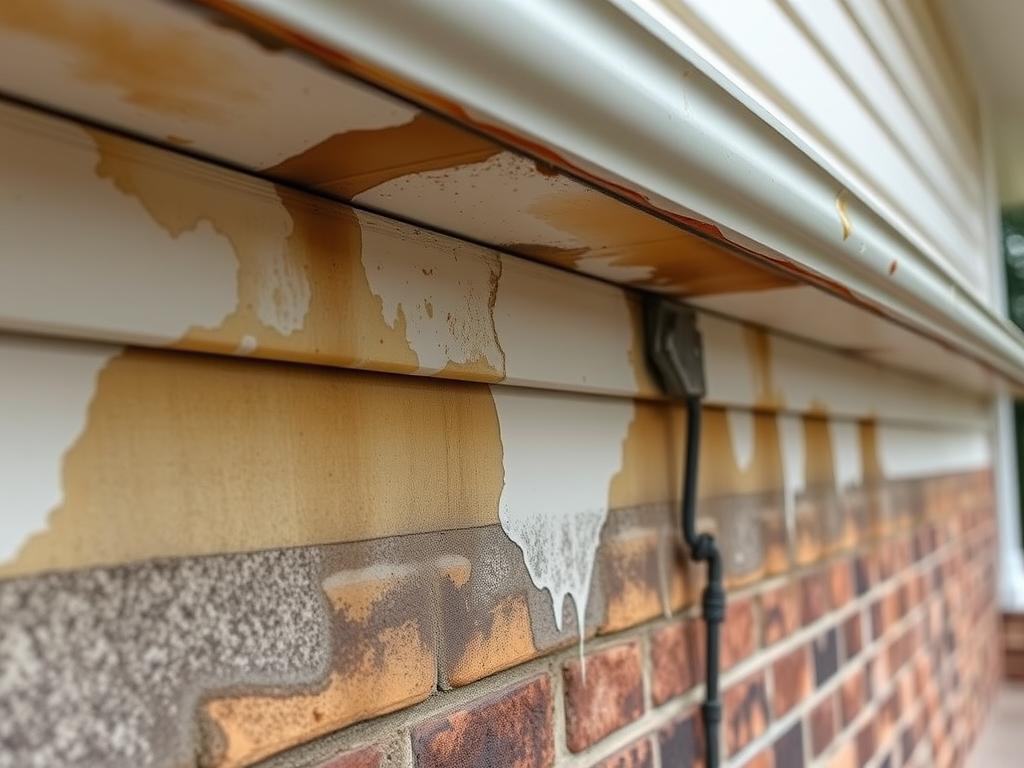
Fascia & Soffit Inspection
Check for rot, peeling paint, or water stains on fascia boards and soffits. These are early warning signs of gutter problems that need immediate attention.
Rainwater Harvesting Considerations
If you collect rainwater, proper gutter maintenance is even more critical. Install first-flush diverters to prevent contaminants from entering your tanks, and ensure leaf guards are compatible with your rainwater collection system.
Cost & ROI: Maintenance vs. Repairs
Regular gutter maintenance is a small investment compared to the potential cost of water damage repairs. Consider these comparative costs:
Preventative Maintenance Costs
- DIY gutter cleaning: $0-50 for tools
- Professional gutter cleaning: $150-350 per service
- Gutter guard installation: $800-2,500 for average home
- Annual maintenance plan: $300-600 per year
Potential Repair Costs
- Fascia replacement: $1,000-3,000
- Internal ceiling repairs: $500-2,500 per room
- Foundation repairs: $5,000-15,000+
- Mould remediation: $2,000-6,000
Insurance Implications
Many Australian insurance policies specifically exclude damage resulting from poor maintenance. Regular gutter cleaning with documented service records can help support claims if damage does occur. Some insurers even offer premium discounts for homes with professional maintenance plans.
Protecting Your Home with Proper Gutter Cleaning and Roof Drainage
Maintaining your gutter cleaning and roof drainage Australia systems is an essential part of responsible home ownership. Regular cleaning, proper system design, and timely repairs protect your property from water damage and extend the life of your roofing system. Whether you choose the DIY approach or professional services, the important thing is to make gutter maintenance a regular part of your home care routine.
How often should gutters be cleaned in Queensland’s tropical climate?
In Queensland’s tropical climate, gutters should be cleaned quarterly due to heavy seasonal rains and high vegetation growth. More frequent cleaning is recommended during the wet season (December to March) and after cyclonic events when debris accumulation is highest.
What are the signs that my gutters need immediate cleaning?
Signs that indicate your gutters need immediate attention include visible plants growing in gutters, water overflowing during rain, sagging gutter sections, water stains on exterior walls, and increased pest activity around your roofline. These symptoms suggest significant blockages that could lead to water damage.
Are gutter guards worth the investment for Australian homes?
Gutter guards are generally worth the investment for Australian homes, especially in areas with high leaf fall from eucalyptus and other native trees. Quality systems can reduce cleaning frequency by up to 90% and prevent blockages during heavy rainfall events. The ROI is typically realized within 3-5 years through reduced maintenance costs.
What downpipe size is required for a 200m² roof in high-rainfall areas?
For a 200m² roof in high-rainfall areas of Australia, the NCC and AS/NZS 3500.3 typically require a minimum of two 100mm round downpipes or rectangular equivalents with at least 7,850mm² cross-sectional area each. In regions with extreme rainfall intensity, additional capacity may be necessary to prevent overflow.
Can blocked gutters void my home insurance in Australia?
Yes, blocked gutters can potentially void home insurance claims in Australia. Most policies include a “duty of care” clause requiring homeowners to maintain their property. If water damage occurs due to neglected gutters, insurers may deny claims on the basis of inadequate maintenance. Regular professional cleaning with documentation provides important protection.
Book Your Free Gutter & Drainage Health Check
Don’t wait for the next storm to discover problems with your roof drainage system. Our experienced technicians can identify issues before they lead to costly damage. Book your no-obligation assessment today and ensure your home is protected year-round.
Book Professional Gutter Cleaning
Insulation & Energy‑Efficient Roofing in Australia: 2025 Ultimate Guide
Read More »🏠 Colorbond vs Tile Roofs: Choosing the Right Option for Your Home
Read More »Roofing Costs in Australia: What to Expect in 2025
Read More »At Roofs.com.au, we are dedicated to providing top-quality roofing services across Australia. With years of experience in the roofing industry, we have earned a reputation for delivering reliable, efficient, and high-quality roofing solutions.
Navigation
Get in Touch
We’d love to hear from you! Whether you need a roof inspection, a free quote, or emergency roof repairs, our team is ready to assist you. Please visit our Contact Page to get in touch with us.
Contact Us Copyright © Roofs.com.au. All Rights Reserved.Roofs.com.au
REQUEST A QUOTE
At Roofs.com.au, we take pride in being responsive, reliable, and ready to solve all your roofing needs. Simply complete the form & one of our team member will be in contact with you shortly.
Request a QuoteRoofs.com.au
Submit your interest
Submit your interest using the form below. We will review your details and get back to you.
Images on This Page
-
https://roofs.com.au/wp-content/uploads/2025/05/roofs.com_.au-logo.png
(no alt text)
-
https://roofs.com.au/wp-content/uploads/2025/07/Water-damage-to-home-exterior-caused-by-blocked-gutters-during-heavy-rainfall.jpeg
Water damage to home exterior caused by blocked gutters during heavy rainfall
-
https://roofs.com.au/wp-content/uploads/2025/07/image-89-1024x683.webp
(no alt text)
-
https://roofs.com.au/wp-content/uploads/2025/07/image-90-1024x847.webp
(no alt text)
-
https://roofs.com.au/wp-content/uploads/2025/07/Downpipe-components-and-installation-on-an-Australian-home.jpeg
Downpipe components and installation on an Australian home
-
https://roofs.com.au/wp-content/uploads/2025/07/image-91-1024x847.webp
(no alt text)
-
https://roofs.com.au/wp-content/uploads/2025/07/image-92-1024x771.webp
(no alt text)
-
https://roofs.com.au/wp-content/uploads/2025/07/image-93-1024x683.webp
(no alt text)
-
https://roofs.com.au/wp-content/uploads/2025/07/image-94-1024x771.webp
(no alt text)
-
https://roofs.com.au/wp-content/uploads/2025/07/image-95-1024x683.webp
(no alt text)
-
https://roofs.com.au/wp-content/uploads/2025/07/Cleaning-debris-from-roof-valleys-on-an-Australian-home.jpeg
Cleaning debris from roof valleys on an Australian home
-
https://roofs.com.au/wp-content/uploads/2025/07/image-96-1024x847.webp
(no alt text)
-
https://roofs.com.au/wp-content/uploads/2025/07/Checking-fascia-and-soffit-condition-during-gutter-maintenance.jpeg
Checking fascia and soffit condition during gutter maintenance
-
https://roofs.com.au/wp-content/uploads/2025/07/image-66.webp
(no alt text)
-
https://roofs.com.au/wp-content/uploads/2025/05/Why-Choose-Us-2.jpeg
(no alt text)
-
https://roofs.com.au/wp-content/uploads/2025/05/Licensing-Insurance.jpeg
(no alt text)
-
https://roofs.com.au/wp-content/uploads/2024/07/roofs.com_.au-logo-2.png
(no alt text)